
G. Maridakis and C. Panitsidis
December, 5th 2025
The Mountain and the Corsair: The Greek A-7E Corsair II “Olympus”
From carrier decks to Greek skies, a legend that endures.
A Subsonic Icon
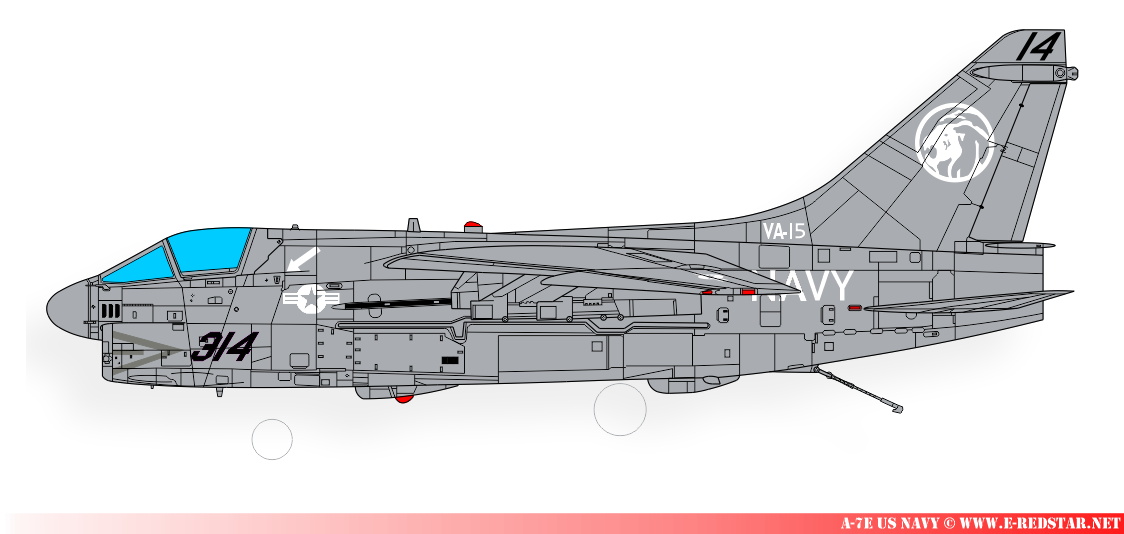
Few subsonic, single-engine aircraft designed for carrier operations ever matched the adaptability, reliability, payload, and precision of the LTV A-7E Corsair II. Known for its unwavering accuracy, and for the mischievous nickname SLUF (“Short Little Ugly Fella”), a playful nod to its compact form, the Corsair earned respect everywhere it flew.
Bureau Number 160616: From America to Greece
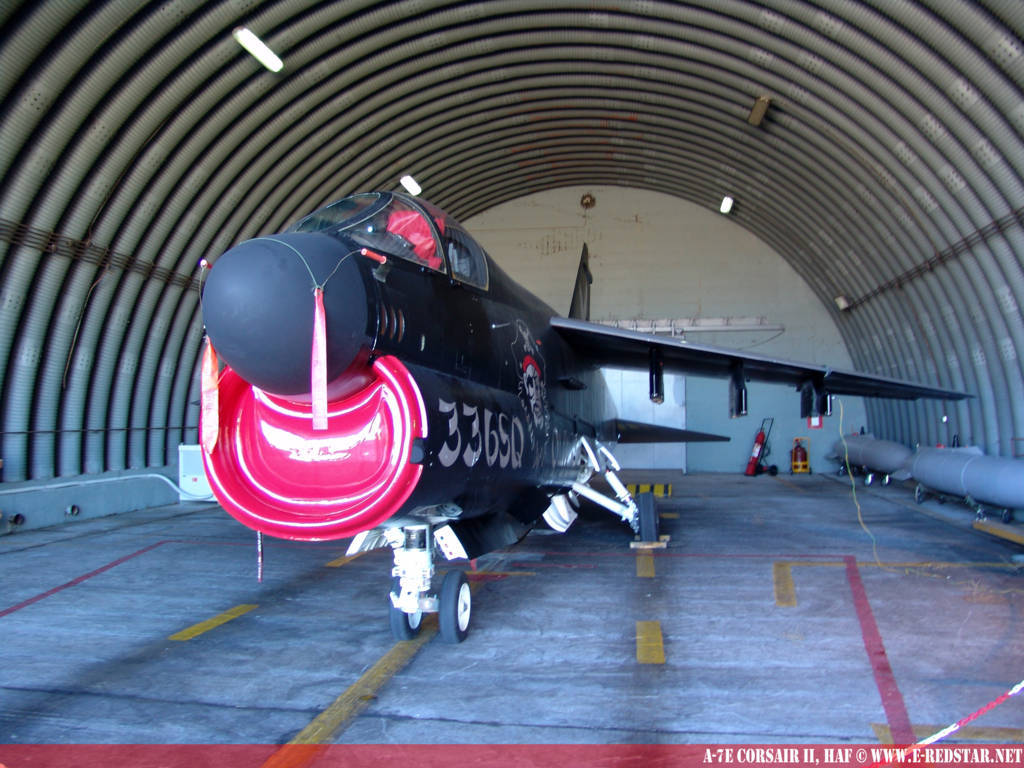
Among them stood the A-7E Corsair II bearing Bureau Number 160616, a member of that select class. Built in 1973 by Ling-Temco-Vought for the U.S. Navy, it embodied the familiar hallmarks of American military industrial design: exacting, purposeful, efficient without ornament.
As NATO’s core mission is collective defence, the Hellenic Air Force received 43 A-7E and 19 TA-7C Corsair II aircraft in September 1994, replacing the ageing F-104G in 335 and 336 Squadrons. These transfers took place in the immediate aftermath of the Cold War and the Gulf War, a period when the United States redistributed surplus aircraft after retiring its A-7 inventory. Programs such as EDA, FMS, and FMF were instruments of long-term strategic cooperation with NATO, not ad-hoc acts of generosity.
GAO Report: Strategy, Not Philanthropy
As the GAO precisely states:
“…In terms of acquisition value, about 70 percent were proposed grant transfers for countries in and around NATO’s southern flank, including Greece…”
The same GAO report adds:
“The type of transfer for 26 A-7E aircraft is Grant, and the acquisition cost is $101,278,086.”
This makes the point unmistakably clear: the transfer was a strategically guided form of military assistance, not a charitable gesture.
A Shift in Doctrine, A Turning of the Page
Although the A-7E Corsair II represented a distinct era in aeronautical design, especially the period between 1960 and 1980, when subsonic carrier-borne strike aircraft were engineered for accuracy, survivability, and high payload rather than sheer speed, a profound change in U.S. defence doctrine soon reshaped the landscape.
After the Corsair, both technology and strategy pivoted.
The transition is recorded plainly in primary sources such as the “U.S. Navy Annual Reports” and the Department of Defence Annual Reports.
In the 1985 DoD Annual Report, for example, one finds the blunt statement:
“The F/A-18 (Hornet) … is being used to replace older F-4s … and A-7s in Navy units, thereby modernising a major portion of the fighter-attack force while significantly increasing the fleet’s air-superiority capability.”
A concise piece of policy, and a clear acknowledgment that the A-7 was being phased out in favour of the new multirole philosophy embodied by the F/A-18.
A Living Legend
Among these aircraft, Bu/No 160616 stood apart. During its twenty years of service with the Hellenic Air Force, it logged 2,042 flight hours, each one bearing the weight of mission, history, and squadron spirit.
The legend surrounding the A-7 Corsair in general, and the A-7E Corsair II in particular, rests on its tactical superiority in specific areas, qualities that often tipped the balance in its favour on the operational field. To illustrate this, a brief but indicative comparative table is presented.
| Aircraft | Role | Strengths | Limitations Compared to the A-7E |
| F-4 Phantom II | Interceptor & Multirole | Supersonic, twin-engine, capable air-to-air | Heavier, more expensive to maintain; lower precision in close air support strikes. |
| A-6 Intruder | All-Weather Attack | Multi-crew, night missions | More complex, higher maintenance costs. |
| F-111 Aardvark | Strategic Strike | Long range, high speed | Very heavy, costly; not a tactical close air support weapon; highly complex. |
| SEPECAT Jaguar | Light Attack | Agile, internationally operated | Smaller payload, limited range. |
| Tornado IDS | Specialised Strike | Penetration capability, modern avionics | Heavy, complex; designed for specific European theater. |
| F-16 (Block 10–30) | Multirole | Fly-by-wire, agile | Early blocks: lower strike precision, payload limitations. |
| Mirage F1 | Multirole | Compact, low radar profile | Not specialised for precision strike. |
Conclusion: A Machine of Balance, Precision, and Purpose
The A-7E Corsair II was neither the fastest nor the most technologically advanced aircraft of its age.
But it was, without doubt, among the most balanced, reliable, and effective tactical strike platforms ever designed.
Its design simplicity, generous payload capacity, superb accuracy, and ease of maintenance made it an irreplaceable instrument in the hands of a skilled pilot, capable of delivering sustained, cost-effective support across the battle space.
The Magic Transformation
In 2005, the Corsair’s story became visible to everyone.
336 Bomber Squadron chose it for a commemorative paint scheme: a black fuselage, the Corsair emblem, the motto “FLY LOW – HIT HARD” beneath the forward fuselage, and on the tail the silhouette of Mount Olympus crowned by its eagle.
A flying work of art, a living emblem of pride, strength, and precision.
Its final flight came on 20 October 2014.
Today it rests in the Hellenic Air Force Museum, poised as if ready to take to the skies once more.
A Legacy That Endures
The Corsair was never a showpiece.
It did not seek headlines or glamour like sleeker fighters. Instead, it forged a quieter legend, one of endurance, reliability, and ingenious engineering where machinery meets human resolve.
On every mission, in every low pass over the Greek countryside, it carried a story: myth fused with metal, squadron spirit etched into its rivets and hydraulic lines.
The lesson of this aircraft’s long presence is modest but deeply true:
greatness often lives in the shadow of glory.
Aircraft like the A-7E “Olympus” endure, serve, and, when their time comes, remind us that precision, discipline, and a touch of daring are the true measures of the legacy they leave behind.
Perhaps one day, a young visitor at the museum will stand before those dark, silent wings and imagine not the history but the flight, realising that some legends are built to outlast the applause.
An Era’s Final Chapter
The A-7E Corsair II stands as a worthy epilogue to an entire era of Western fighter-aircraft design, from the late 1970s through the 1990s.
A successful design with an influence matched by few, it shaped doctrine, operations, and imagination alike.
This poster seeks to prepare the aviation enthusiast for such a contemplative pilgrimage, presenting, with fitting reverence, the defining elements of the A-7E Corsair II’s design significance.
Sources:
1. U.S. General Accounting Office (GAO), NATO Southern Flank Aircraft Transfers, NSIAD-94-27, 1994, pp. 42 & 45. https://www.gao.gov/assets/nsiad-94-27.pdf
2. U.S. Department of Defense, Annual Report to the Congress, Fiscal Year 1985, p. 165. https://history.defense.gov/Portals/70/Documents/annual_reports/1985_DoD_AR.pdf
Comments